‘All signals are green, but we are not yet ready’
The continue-unless moment for the Einstein Telescope in the Euregio Meuse-Rhine (EMR). You could call it an interim result. Put simply, things are moving in the right direction and there is currently no reason to stop the feasibility study prematurely. With the important nuance, by the way, that not all results of studies are yet known and therefore still have to be taken into account. A couple of questions about this for Theo Reinders, the project manager for the feasibility phase.
Continue-unless. What is that about?
Theo Reinders: ‘We are working in the project office with your and my tax money. We get that working capital from our government partners because they have confidence in the opportunities of the Einstein Telescope. It makes sense then they want to keep a finger on the pulse in terms of progress and expenditures. We all agree on one premise: as soon as it turns out we cannot build the Einstein Telescope here, we will stop immediately. Continuing to investigate against better judgement would cost an unnecessary amount of taxpayers’ money. We don’t want that. That is why we have built in evaluation points. We call those points ‘continue-unless’. In other words, we can continue the feasibility study unless it would already be clear at such an evaluation point that it has no chance of success.’
What is weighed in such an evaluation exercise?
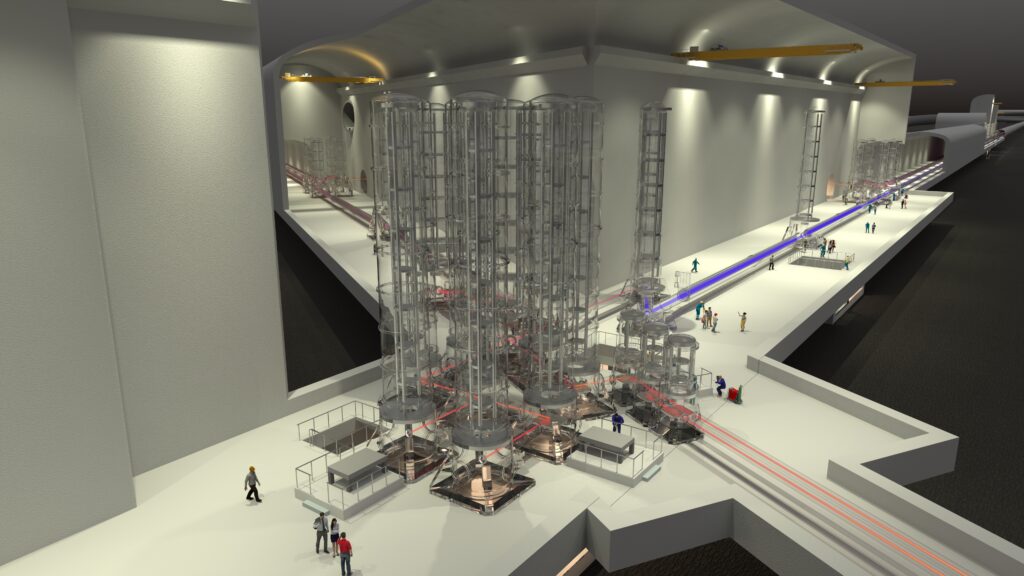
Theo Reinders: ‘That depends on what phase we are in. The last time, we mainly wanted to find out if the construction of caverns and tunnels for the Einstein Telescope in the subsurface in our region is possible. Should that subsurface make construction of the telescope impossible, we will stop. Thankfully, that is not an issue. More specifically, the progress and already available results of drillings in 2024 and 2025 have been reviewed. In addition, the manager responsible for the investigation into the tunnel construction has assessed it from his perspective and concluded that there are no so‑called showstoppers.’
Can you tell a bit more about the results?
Theo Reinders: ‘The most important result is that we can conclude that the subsurface allows the construction of tunnels and caverns. There is currently nothing to suggest that the construction of the Einstein Telescope and its operation are not feasible. We were able to establish this on the basis of our knowledge of the subsurface. We listed this knowledge by relating the results of the drillings to civil engineering requirements for tunnel construction. Based on historical knowledge, that was also what we expected, but it is still valuable and important to be able to confirm that on the basis of research.’
It was not only about construction, but also about installing the equipment for the Einstein Telescope?
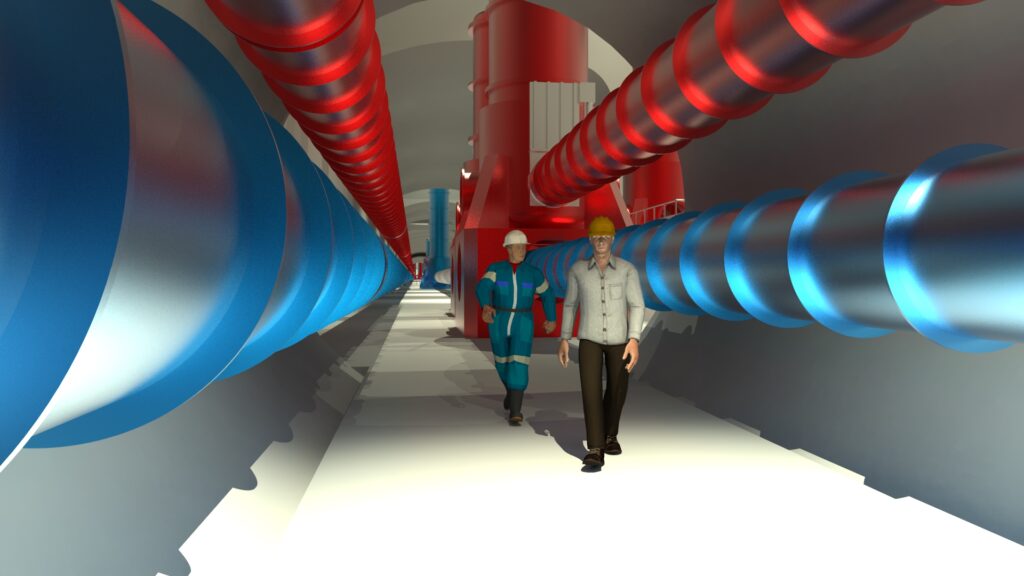
Theo Reinders: ‘Correct. With the geological knowledge we have gained, we have seen how geology will affect the civil engineering structure. But we did not just look at geology and whether we could build a tunnel and caverns. We also explored opportunities to organise the inbound and outbound transport of equipment and materials more efficiently. And in doing so, also whether obstacles are already surfacing that prevent us from including technical installations in the design, e.g. ventilation, lifts or pumps. Finally, we have performed an initial test of whether we can ensure safety in the design and meet regulations in this regard.’
Is the final conclusion then that the subsurface is definitively suitable?
Theo Reinders: ‘No, that is still some way off. Currently we are doing the final drillings to further map the subsurface. And we are yet to get results from hydrological studies and noise measurements. Those are also very important. This then also includes the question of how we can resolve any issues related to ground water or surface water, for example, and how we can dampen environmental noise so that it does not affect the telescope deep underground.’
Does the environment – that is, the situation above ground – also play a role?
Theo Reinders: ‘This evaluation moment already includes a tentative first look at the environmental aspects. That did not result in a red flag. But it was only an initial indication, because many environmental investigations are still ongoing. Smart logistics, energy, sustainable processing of the soil we excavate, resident participation, to name a few examples. In short, we are not there yet.’
Is such an evaluation moment a reason to celebrate?
Theo Reinders: ‘As long as there are no showstoppers or red flags, we can just move on. Of course, we’re certainly happy for now, but there’s still too much work awaiting us to celebrate that. It is really an interim result. And that result is satisfactory. All signals are green, but we are not yet ready. As mentioned, many results are yet to come in. Continue-unless relates primarily to the question of responsible spending of taxpayers’ money.’
So when is there cause for that celebration?
Theo Reinders: ‘For a start, it is already a great joy to be allowed to work on a project like this. My colleagues within the project feel the same way. The biggest milestone is the delivery of our bid book by the end of this year. That might be worth a celebration. But the real celebration will take place in 2027, hopefully. Then the choice of location for the Einstein Telescope will be announced. We are assuming we can have a great celebration then.’