‘Working step by step towards sustainability and circularity’
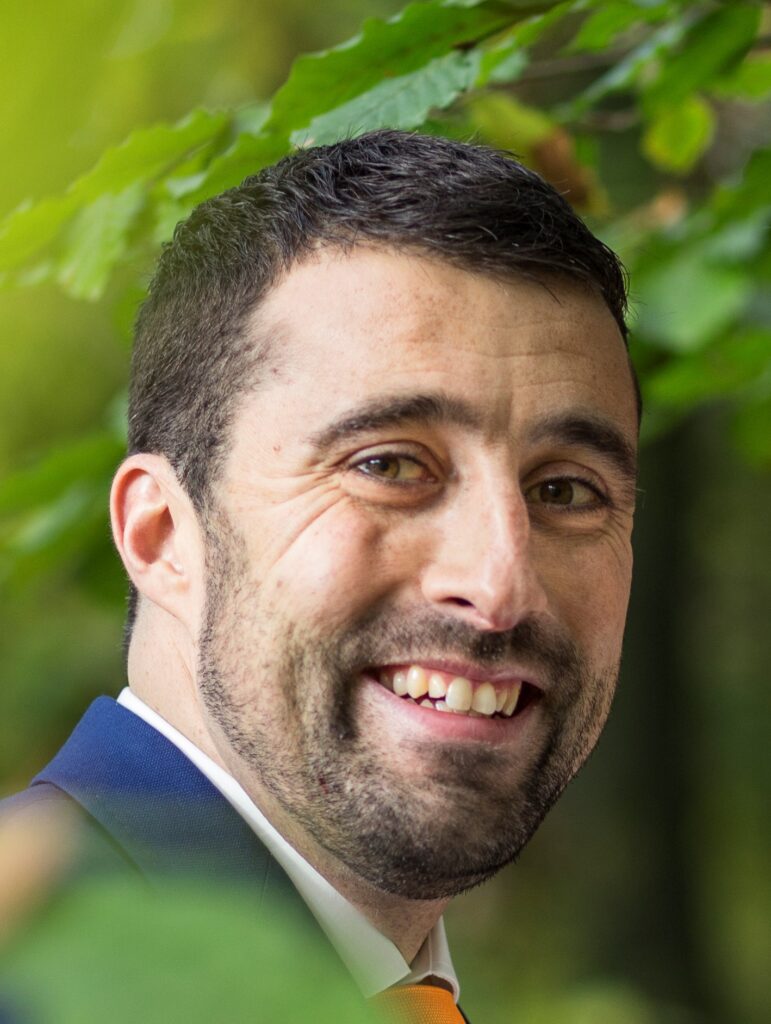
On behalf of the Einstein Telescope EMR Project Office, a working group from VITO (Flemish Institute for Technological Research) and the University of Antwerp is investigating the opportunities in the field of sustainability and circularity in the construction, operation and dismantling or repurposing of the Einstein Telescope. A few questions for John van Oorschot, contact person for the working group and Senior R&D Lifecycle Assessment and Circularity at VITO.
What exactly do you do?
‘We are investigating the possibilities for building and operating a sustainable Einstein Telescope and repurposing it after a 50-year lifespan. In doing so, we are paying maximum attention to the circularity of the materials used. This is a very broad playing field: from the use of materials in the construction of tunnels to how you deal with drained water.’
Why?
“Firstly, because sustainability and circularity are two important themes. But they are also container concepts. We want to show what this can mean in concrete terms. Directly for the total infrastructure of the Einstein Telescope itself, but certainly also for society as a whole. We are committed to value retention. This includes the useful reuse of land, water and energy for the local community. This conscious choice may well be of strategic importance in bringing the Einstein Telescope to this Euregio. If you look at it that way, this study could also be trendsetting. The telescope would then be an example and perhaps a catalyst for other major developments in the region in the future.”
What does that mean in concrete terms?
‘We look at what you can do that is smarter than usual. Around 4 million cubic metres of soil will have to be removed from the ground for the construction of the tunnels. Could that soil perhaps be used for the concrete production of the telescope? Or to reinforce dykes where necessary, given that we are increasingly faced with flooding, not only in this Euregio.’
That sounds interesting. Another example?
“Hydrological research is being carried out for the underground telescope, including by the University of Liège. There is a good chance that water will have to be pumped out. Can we use that water? Perhaps as drinking water, which is in short supply. Or for use in agriculture? By thinking in this way, you are not only working on the construction of a scientific instrument called the Einstein Telescope, but we may also be able to tackle issues that the entire Euregio is or will be facing.”
One more?
‘Think of the many empty offices. Perhaps you could use them for the Einstein Telescope instead of building a new office. And the next step is that you could perhaps use geothermal energy to heat those offices or houses in the area.’
That seems quite difficult?
“What makes it more difficult is the scale of this project, not the possibilities or techniques. It’s too easy to say, ‘It’s difficult, so let’s not bother, it’ll never work. That’s not how we think, and neither does the Einstein Telescope project office. In fact, a project of this innovative level deserves solutions that matter. Solutions that also benefit the Euregio in terms of sustainability and circularity. The scale may make it more complicated, but no one is shying away from that.”
How do you obtain all the information you need for this?
Our assignment falls within the remit of sustainability manager Johan Rutten from the project office. We obtain our data from researchers into hydrology, for example, or from people involved in the tunnel construction for the Einstein Telescope.
When will you have the results of the study ready?
‘We will deliver a few interim reports and aim to have a version ready for the project office’s bid book around the summer of 2026. A few months later, we will deliver the final version, which will certainly be consistent with that.’
And will all of this actually become reality?
“Our task is to contribute to the feasibility study. Logically, this focuses on what is needed to build the Einstein Telescope in the Meuse-Rhine Euroregion. I am pleased that the project office has the ambition to use this telescope to launch a social impulse in the Euregio. Something that will benefit municipalities and residents. I am convinced that these opportunities exist. We also understand that the next step will require politicians and administrators to support the concrete development and implementation of these ideas.”
Are you optimistic?
‘Yes, absolutely. This could become the driving force behind the sustainability of the built environment. It has to be: we can hardly expect society to go along with the circular transition while at the same time building a scientific instrument of the highest innovative level and not doing so ourselves. That would be impossible to explain.’


