From drilling and dialogue with the local community to bid book
What did 2025 bring and what will next year bring for the Einstein Telescope? And by this we mean, of course, the plans for the underground telescope in the Meuse-Rhine Euroregion. From the project office’s management team, Stan Bentvelsen reflects on the past and looks ahead.
By 2025, it should be clear where the Einstein Telescope will be built in the Euregion. When will this be clear?
STAN: ‘That’s an easy one. Early next year, we will need to know, of course. After all, the bid book will be made and finalised in the course of 2026. And that bid book is partly based on the preferred location for the underground triangle.’
Why was that not achieved in 2025?
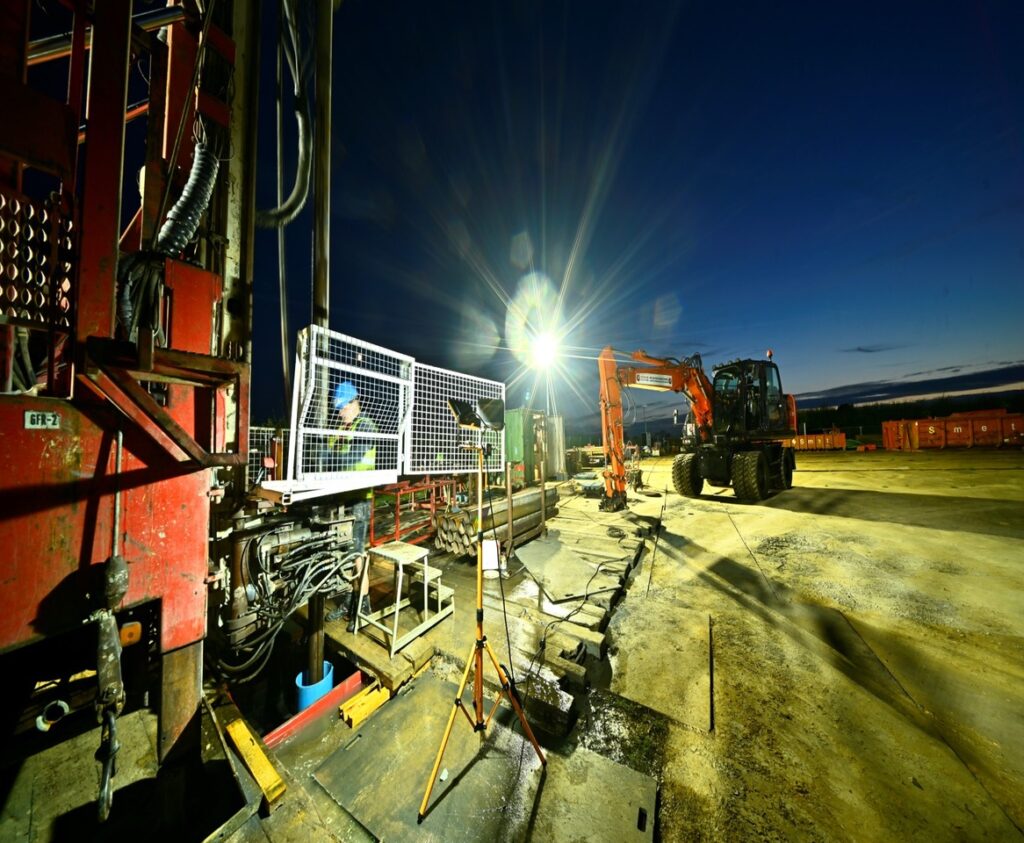
STAN: ‘We have experienced some delays in our drilling and seismic survey. Just dumb luck. But dumb luck that took time.’
So what else is needed?
STAN: ‘Some drillings are currently still ongoing on the Walloon side. A passive seismic campaign to measure ambient noise in 30 municipalities is in the pipeline. A third campaign may follow early next year. With this, we want to confirm that the Einstein Telescope will soon be unaffected by noise from the environment. We are also still working on the hydrological study. Meanwhile, in light of the preliminary results, attention is being paid to the tunnelling itself. The results of all these studies, taken together, ultimately determine the location. And that is only from an “underground” perspective.’
And the environment?
STAN: ‘Logical question. At the same time, the effects on the environment above ground play an important role. What can we do to minimise the impact on the environment. To this end, Hasselt University and a number of partners such as VITO are investigating whether we will soon be able to run the telescope on renewable energy that we preferably produce ourselves. We are also looking at the extent to which we can reuse the approximately 4 million cubic metres of soil we excavate. For concrete for the shafts and tunnels, for example, but also for other possibilities.’
Quite complicated..
STAN: ‘You can say that! Not to mention that we are consulting with all kinds of Belgian agencies to be able to use the railway yard in Montzen soon, so we can do much of the removal of soil and the supply of materials for the telescope by rail. That significantly reduces freight traffic.’
How do you keep the local community informed?
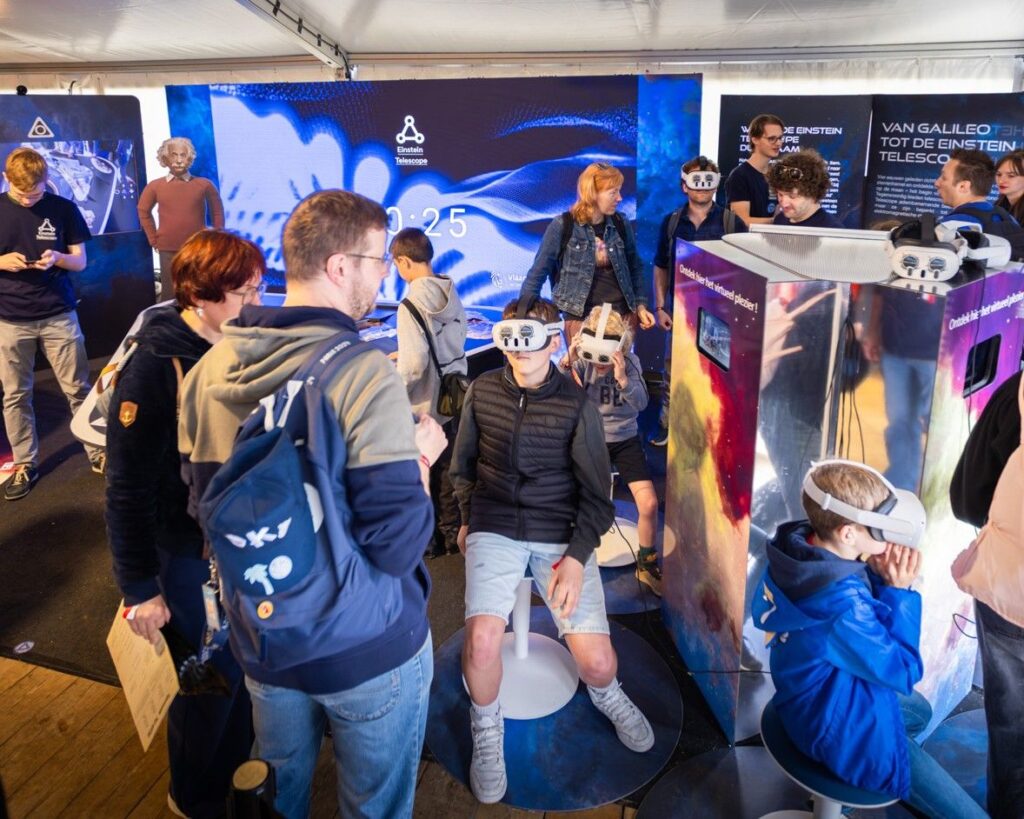
STAN: ‘Through our communication channels such as LinkedIn, Instagram, our website and newsletter.” Recently, we organised four major public meetings to bring people up to speed. On our behalf, Hasselt University is conducting dialogues with the local community in various forms and at various locations in the search area. Their mission is not to communicate what we are doing, but mainly to gather wishes, concerns and the opportunities residents see for their own surroundings.’
Is it realistic for the project office to specify that already at this point?
STAN: ‘It starts with having a sound knowledge of what residents care about. And it is our ambition to respond as much as possible to that knowledge. But can we fulfil all wishes? To be honest, no. But we do want to make every effort to do the best we can. A good example is the Charter we very recently signed with Bocageland Landscape Park to collaborate on a regional plan for the area. We both have different goals, but at the same time we have a common interest in ensuring that the landscape is not permanently harmed and, ideally, becomes better than we found it before the start of construction. For the Bocageland Landscape Park, that is the goal. For us, it means that we do not have to expect any additional noise deep in the ground. Win-win.’
Will the Einstein Telescope also be a driver of economic growth, innovation and new jobs?
STAN: ‘There are two reports this year that indicate – from a different perspective – that the Einstein Telescope could actually become “the bread and butter of the future” for the future generation. Not only in this Euroregion, but also in the three countries. The first study commissioned by the Flemish government and carried out by Econopolis early this year confirmed this. It concludes that there have never been as many opportunities as there are now, and that such a number of opportunities may never occur again. And not just for Flanders; researcher Geert Noels has indicated that cooperation between the three countries would yield more benefits than there would be if everyone set out their own course of action.
The regional development agency for Limburg LIOF recently published its second Valorisation Perspective report. This report endorses the huge opportunities for maximum leverage of the new or improved technologies in other sectors. The report concludes that it could even contribute to Europe’s autonomy in respect of competition from the United States or China. That is quite something in these times.’
And in practice?
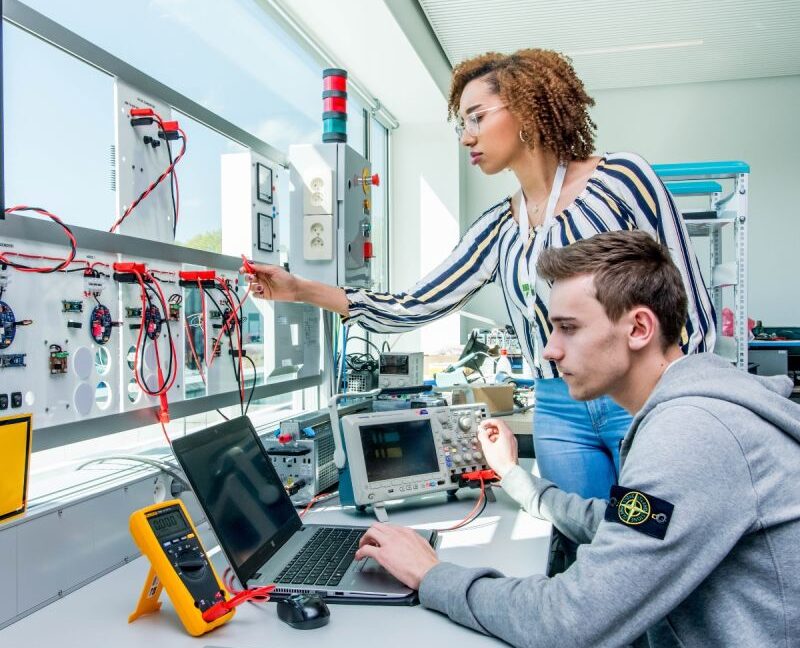
STAN: ‘Currently, many consortia are developing all kinds of technologies for the telescope. Lasers, cooling technology, mirrors, vacuum. These must really be state of the art. Those technologies will undoubtedly generate spin-offs in other sectors. The state-of-the-art lasers may be used to improve medical imaging, for example. But these technological discoveries and innovations also offer opportunities in aerospace, life sciences or making the climate more sustainable. Our business developers showcase those opportunities at international trade fairs. And that resonates positively, for example at the beginning of the year at Hannover Messe and very recently at the Europe Space Tech Expo in Bremen. Not coincidentally, both are in Germany.’
What do you mean by “not coincidentally in Germany”? Does that have to do with the fact that Saxony is now also a formal candidate?
STAN: ‘There are now three candidates for the Einstein Telescope in Europe: Sardinia, the federal state of Saxony in Germany, and we, with the Meuse-Rhine Euroregion. With Saxony also on the candidate list, it becomes very important what Germany will do. We are assured of the support of our neighbour and partner North Rhine-Westphalia. The prerequisite for this is that the Federal Government in Berlin also supports us. The Merz government has put the Einstein Telescope on the scientific priority list, but has not yet made a choice regarding its location. That is quite a tricky one.’
Have there been any recent changes in the management of the project office?
STAN: ‘That is correct. This has to do with the more intensive cooperation from North Rhine-Westphalia and from Wallonia. For example, our Walloon colleagues have recently set up their own task force to prepare Wallonia for the arrival of the Einstein Telescope. In fact, some colleagues from that task force have been working in our project office for quite some time. For this reason, our clients have decided to expand the management of the project office to include representatives from those countries. These are Olivier Granville from Wallonia and Achim Stahl from North Rhine-Westphalia. After all, we are dealing with nine ministers as clients. In addition, a change took place in Flanders: Hans Plets has become CEO of the entire Flemish organisation behind the Einstein Telescope. It is then no longer possible to be director of our project office at the same time. Besides, Hans would have to wear different hats then, and he obviously does not want that.’

Finally: how do you see 2026?
STAN: ‘Last year, we said 2025 would be the year of truth. In many areas, it was. So far no news. 2026 will also be the year of truth: we will then have to produce our bid book. In it, the EMR countries formally confirm our candidature and outline how we intend to build the Einstein Telescope here. Our bid book team is working on this. Whereas a few years ago people sometimes made the remark that the project office consisted only of men, it is nice to note that the bid book team consists of five women. After 2026 as the year of the bid book, 2027 will be another year of truth. After all, the final choice of location will then be made. There is only one thing we can do: our utmost to gather all kinds of building blocks and eventually present a strong bid book. And that is what we are doing every day!’