‘There’s gold here just waiting to be picked up’
The Euregio Meuse-Rhine (EMR) organisation has been promoting cross-border cooperation in the regions of South Limburg, Belgian Limburg, Aachen, Liège and Eupen for fifty years. One of the main focuses at the moment is lobbying for the Einstein Telescope. ‘If there is any place where this project can be a success, it is in this Euregio,’ says director Michael Dejozé. ‘Broad and strong cross-border cooperation is a prerequisite for this billion-dollar project, and we have it here.’
The Euregio Meuse-Rhine was established fifty years ago. Just to recap: what is your brief?
Michael Dejozé: ‘Cross-border cooperation should be normal in a united Europe with its free movement of goods, services and people. Especially here, in this densely populated area where physical borders blurred a long time ago and where we share so much culture and history. In practice, however, things are more complicated. Cross-border workers, for example, have to deal with different laws and regulations. Public transport is complicated because of differences in fares and payment methods. German diplomas are not automatically valid in the Netherlands or Belgium, and vice versa. I can name dozens of other themes; the fact is that there are many obstacles and barriers standing in the way of cross-border cooperation.’
‘As EMR, our first task is to bring parties together. Provinces, municipalities, other bodies, administrators and politicians. They can create conditions to remove obstacles. We are the lubricant, the independent party operating not on behalf of a country but on behalf of a cross-border region. Our people are the facilitators who keep things running, making it clear time and again that, together as a region, we are much more than the sum of the parts. Also, by developing projects and building new partnerships and networks, we will bring everyone – Euregio and partner regions – a step further. There is gold here just waiting to be picked up.’
So what have you achieved in half a century?
‘In the first few decades, there were not that many visible results. The main emphasis was on cultural exchange and getting to know each other better. Since the 1990s, our commitment has become more visible. Also because of the disappearance of borders and the establishment of the Schengen area. We have strongly advocated for Euregional education and for learning each other’s languages. Since then, the number of Euregio schools and Euregio profile schools has been growing every year. A first step in the Euregional life and work of young people.’
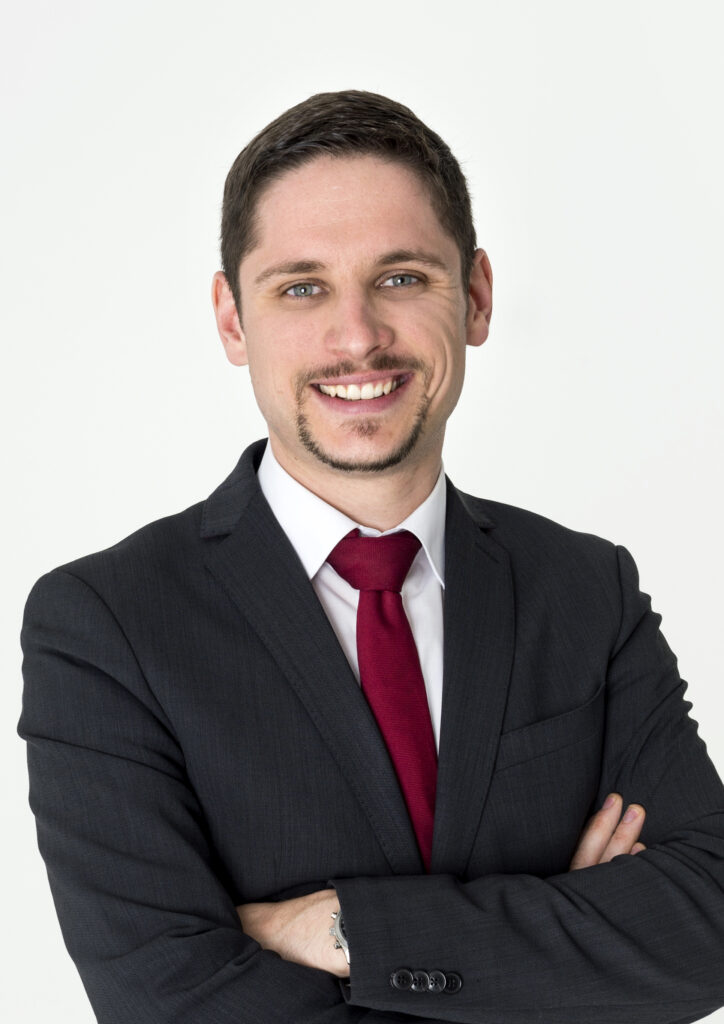
‘Working in the Euregio is also such a theme. Milestones have been achieved there, including through our lobbying for streamlining tax differentials. Partly because of this, there are now thousands of cross-border workers – and the number keeps growing. The Border Information Points, which support border workers on various issues, are numerous and meet a great need.’
‘In terms of public safety, we have also made great strides. The fire brigades, police forces and emergency services work together within EMRIC (Euregio Meuse-Rhine Incident Response and Crisis Management). In the case of emergencies, they can easily cross the border. They share equipment and information. A Dutch ambulance or a Belgian fire engine may provide assistance across the border. In the past, such deployments encountered legal complications. At events, you see police patrols with German, Belgian and Dutch uniforms.’
‘Another great example: cross-border public transport. The Drielandentrein (train of the three countries) is running between Germany, the Netherlands and Belgium. After a very intensive, years-long process. It was not easy, also because of the language barrier and technical differences. But it does run, and we have almost reached the point where everyone can buy one single ticket (the Euregio ticket) to travel through the three countries. Such a project requires commitment and financial contributions from numerous parties. We try to iron out problems, massage them, and, above all, convince everyone of the importance of cooperation. That helps, for sure! For us, the Drielandentrein is proof that cross-border cooperation really is possible. A prelude to international transport across Europe without being bothered by borders. Isn’t that what everyone wants?’
There are four of you working on the Einstein Telescope. Can you play a role in the decision to bring the telescope here?
Michael Dejozé: ‘Of course, the EMR can play a role in this. Behind the scenes, we are already playing that role by lobbying and, where possible, by convincing and informing. The Einstein Telescope can become the pinnacle of cross-border cooperation. Look at what this area of barely 11.000 square kilometres already has to offer. Hundreds of knowledge institutes, some of which are world-renowned. Universities and universities of applied science in Liège, Aachen, Hasselt, Maastricht and Heerlen, each with their own specialisms and unique facilities. Only by combining them can you develop enough strength to get this wonderful project off the ground.’
‘And the great thing is: the cooperation is already there. Listen at the campuses and you will hear the different languages of researchers, scientists, students and entrepreneurs. Belgium, the Netherlands and Germany have earmarked hundreds of millions of euros for the telescope. This region is the most suitable, as it already has a well-functioning ecosystem with numerous forms of cooperation. There is already 360-degree thinking here, I often say.’
‘I am optimistic that the Einstein Telescope will be built here. Imagine what that means. Thousands of jobs, a boost for education, a position as a European top technology region, more inhabitants and tourism: a new future lived together! As EMR, we have assigned four staff members to the project: Carine van Hove, Marc Genten, Michel Margraff and Jan Schliewert. With roots in all provincial boards in our area of operation. And of course, our chairman Jos Lantmeeters, successor to Emile Roemer, and yours truly are also fully engaged. Support is one hundred per cent. The construction of the telescope would be a lovely gift for the EMR to mark fifty years of striving for cross-border cooperation.’
And what if, unexpectedly, the choice falls on Saxony or Sardinia?
‘The knowledge we are accruing now is crucial for many industries and sectors. Think of the cryo and mirror industry, engineering, metal, digitisation and innovations that are taking off now. We focus on digitisation, on Artificial Intelligence, on collaboration. There are already talks about building a Gigafactory in our region to make Europe more digitally self-sufficient. These plans are gaining traction partly through the telescope project. The optical-fibre backbone also runs through our region then, and there are plans to build hydrogen pipelines underground in the medium term. In the field of logistics, the region also plays a central role. This train will not stop, cross-border cooperation is becoming a reality here. With the Einstein Telescope and everything that goes with it, a European, cross-border future awaits. And, of course, the best thing would be if the telescope is built right here under our noses.’
Fifty years of Euregio Meuse-Rhine
In 1976, the Queen’s Commissioner of the Dutch province of Limburg, the governors of the Belgian provinces of Limburg and Liège and the Regierungspräsident of Cologne laid the building blocks for the establishment of a working group on cross-border cooperation. Since 1 April 2019, the Euregio Meuse-Rhine has been a European Grouping of Territorial Cooperation (EGTC). With its three languages, five partner regions and more than 260 municipalities, it is considered one of the most versatile of Europe’s more than 60 official euregios.


