Ten editions of the Einstein Telescope at Precision Fair
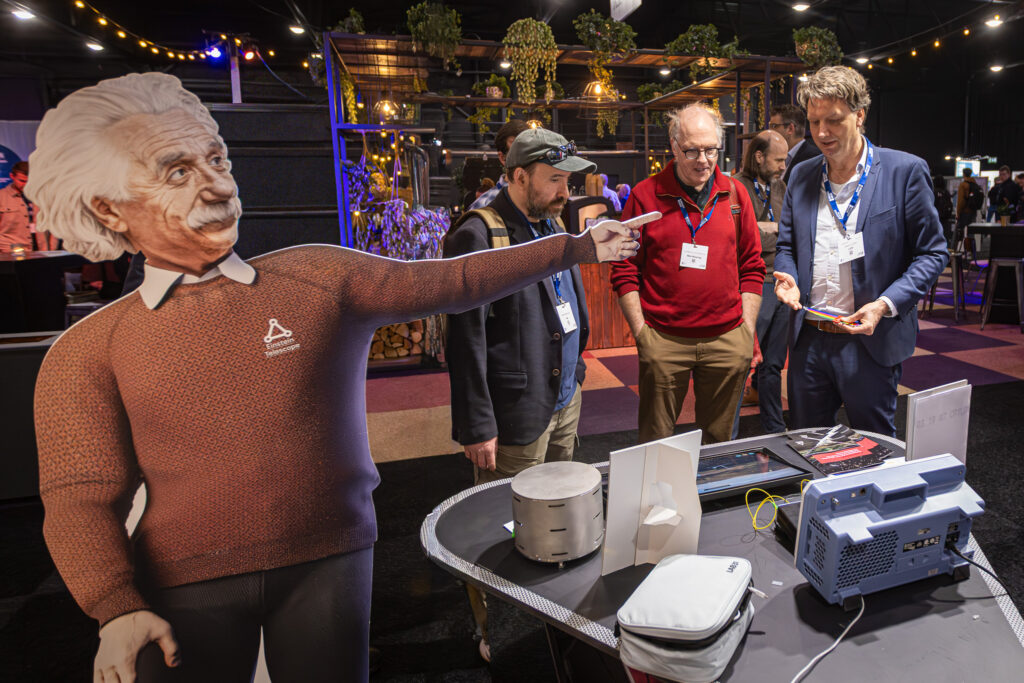
Ten years after the European plans for this future gravitational wave detector were first presented at the Precision Fair, the project has grown into an international collaboration between science and industry. More than 100 companies and research institutions are now working on innovative precision technology for the Einstein Telescope. During the 25th edition of the Precision Fair on 18 and 19 November in Den Bosch, the Einstein Telescope made its tenth appearance at this international trade fair.
Within the Euregio Meuse-Rhine region too, companies, scientists, engineers and research institutions from the Netherlands, Belgium and Germany are collaborating closely on preparations for the Einstein Telescope. The Precision Fair once again provided a platform to showcase technological progress, share knowledge and explore new opportunities for collaboration.
From sensor technology to vacuum tubes
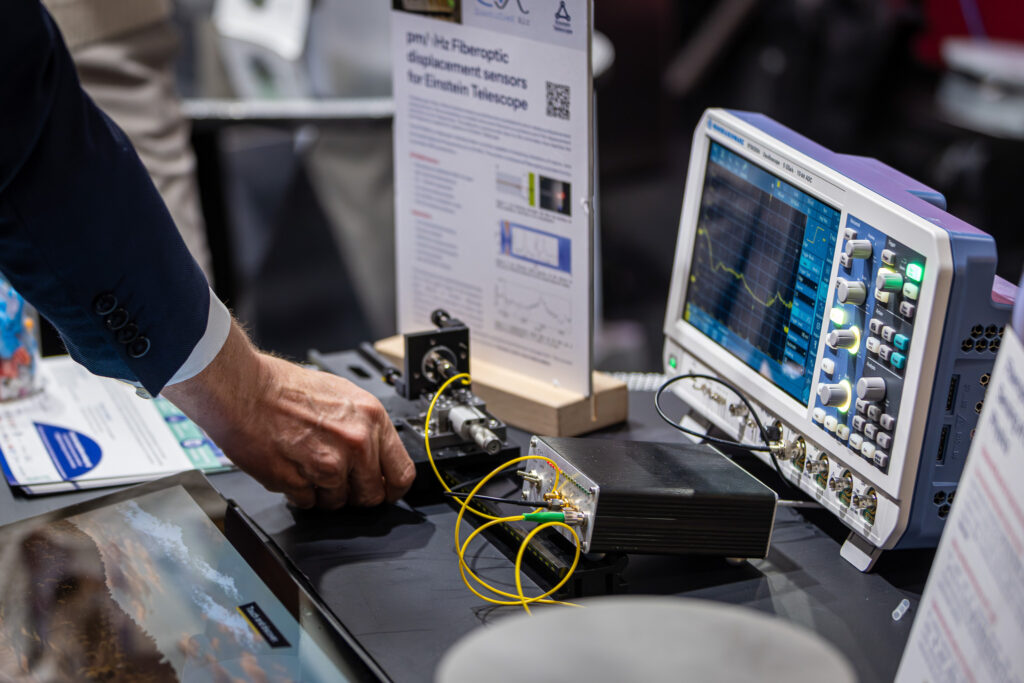
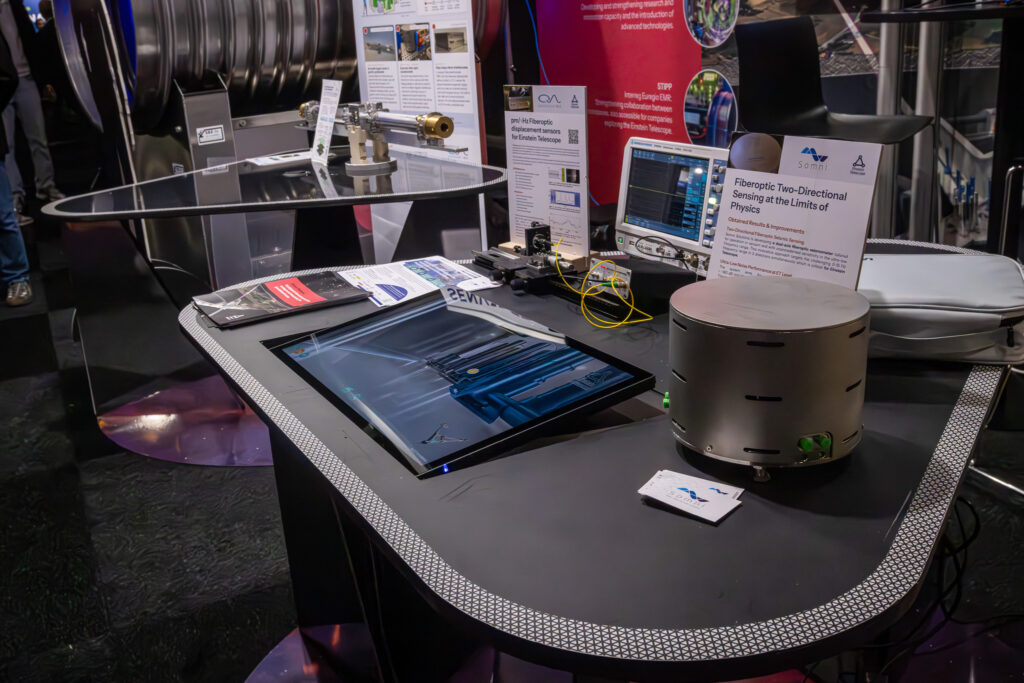
At the Einstein Telescope EMR stand, various technology partners presented their developments. Quantified Air, InnoSeis Sensor Technologies and Somni Solutions showcased their interim results in the field of ultra-sensitive sensor technology. SBE from Eijsden presented a prototype of a vacuum tube for the future detector.
These developments illustrate the diverse technological challenges facing the Einstein Telescope. In order to detect even the smallest gravitational waves, innovative solutions are required in areas including sensor technology, vibration isolation, vacuum technology and cryogenic cooling.
New opportunities for the precision engineering industry
The Einstein Telescope was also discussed at length during the Big Science lecture programme. Albert van Dorssen, Business Developer for Valorisation at the Einstein Telescope, provided an update on the project’s progress and highlighted the opportunities for the business community in 2027 and 2028. Jan Lamkin of SBE delved deeper into the technological challenges surrounding the production and cleanliness of the vacuum tubes.
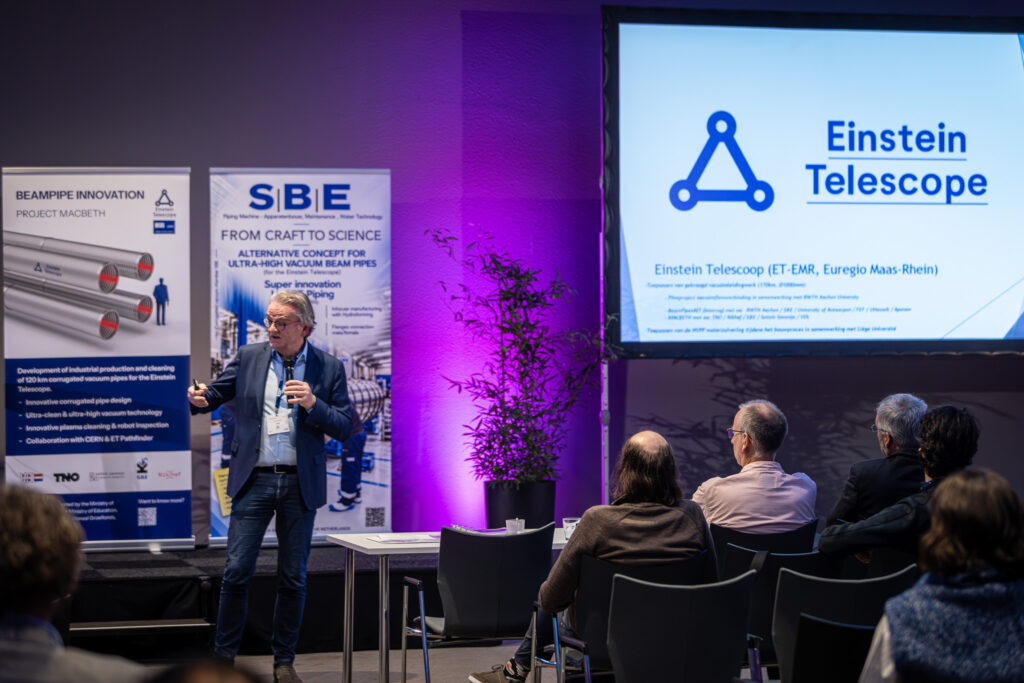
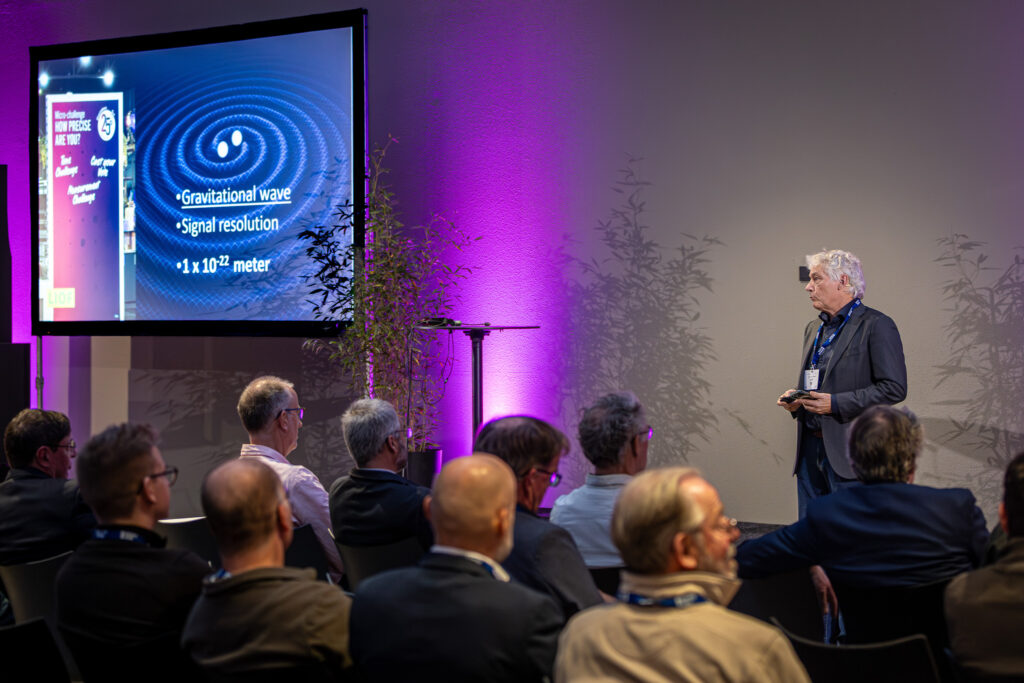
In the coming years, there will continue to be plenty of opportunities for companies to contribute to the development of the Einstein Telescope. Even after construction of the infrastructure begins, a further six to eight years are expected to be required for the development of the necessary precision technology. “So there will still be plenty of new opportunities for precision engineering companies,” said Albert van Dorssen.
The focus will gradually shift from technology development to industrialisation, thereby also giving other types of companies the opportunity to contribute to the project.
Innovation with far-reaching implications
The technologies being developed for the Einstein Telescope also offer prospects for other sectors, such as the semiconductor industry, quantum technology and medical science. As such, the project is already a driving force behind technological innovation and economic development, even before the final site has been selected.
Ten editions on from its first participation, the Precision Fair once again underlines the importance of collaboration between science and industry. By pooling knowledge and expertise across national borders, partners in the Meuse-Rhine Euroregion are working together on the technology for tomorrow’s science.