700 Geophones Measure Noise in 30 Municipalities of the Meuse–Rhine Euroregion
At the request of the Einstein Telescope project office, a so-called noise study will from the end of May be launched in 30 municipalities across the Meuse–Rhine Euroregion. The aim is to map the extent to which noise—originating, for example, from highways or other environmental vibrations—penetrates into the deeper layers of the ground.
To measure this, approximately 700 noise sensors (geophones) will be temporarily installed. These measurements, also known as passive seismics, will last several weeks, after which the geophones will be retrieved.
These seismic surveys are scheduled to take place on both public (municipal) and private land. Agreements with most landowners were already made last year. Municipalities have been or will be informed. The study is carried out by the University of Liège, the Royal Netherlands Meteorological Institute (KNMI), and RWTH Aachen University.
Why this noise study?
This passive seismic research is part of the feasibility study for the Einstein Telescope. The goal is to build the telescope in the border region of the Netherlands, Belgium, and Germany, at a depth of 250 to 300 meters underground.
The exact locations of the three underground corner points of the telescope have not yet been determined. Various studies are still being conducted this year to define them. You may have heard or read about soil drilling campaigns aimed at assessing ground stability.
What does the study look like?
The noise study involves measuring seismic noise. In May, geophones will be temporarily installed at 700 locations across 30 municipalities in the Euroregion.
These are small seismometers that record ambient noise caused by surface activities such as industry or traffic. Each measurement lasts on average four weeks. A similar campaign was conducted in 2024.
After the geophones are retrieved a few weeks later, the data is analyzed. The analysis focuses on the effect of vibrations (noise) measured at the geophone locations compared to sites where earlier deep drilling has taken place.
Passive seismic research does not cause any disturbance. No road closures or traffic measures are required.
What’s a “geophone”?
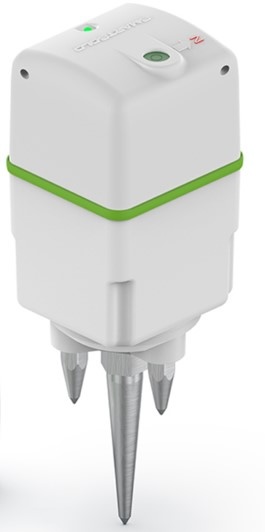
It’s a small, sealed plastic box measuring 10 by 10 centimeters, equipped with a built-in noise sensor. The device produces no sound and emits no signals. A very faint LED light on top indicates whether the geophone is operating.
The geophones are buried at a depth of about 15 centimeters and retrieved after three to four weeks. The hole is then filled in again. This has no impact on the use of the land during that period. Therefore, their impact is virtually negligible.
Further seismic surveys
Following the completion of this seismic campaign, two further seismic surveys are planned later this year. Keep an eye on this website for the dates of these studies.


