Tech companies discover opportunities at ETpathfinder
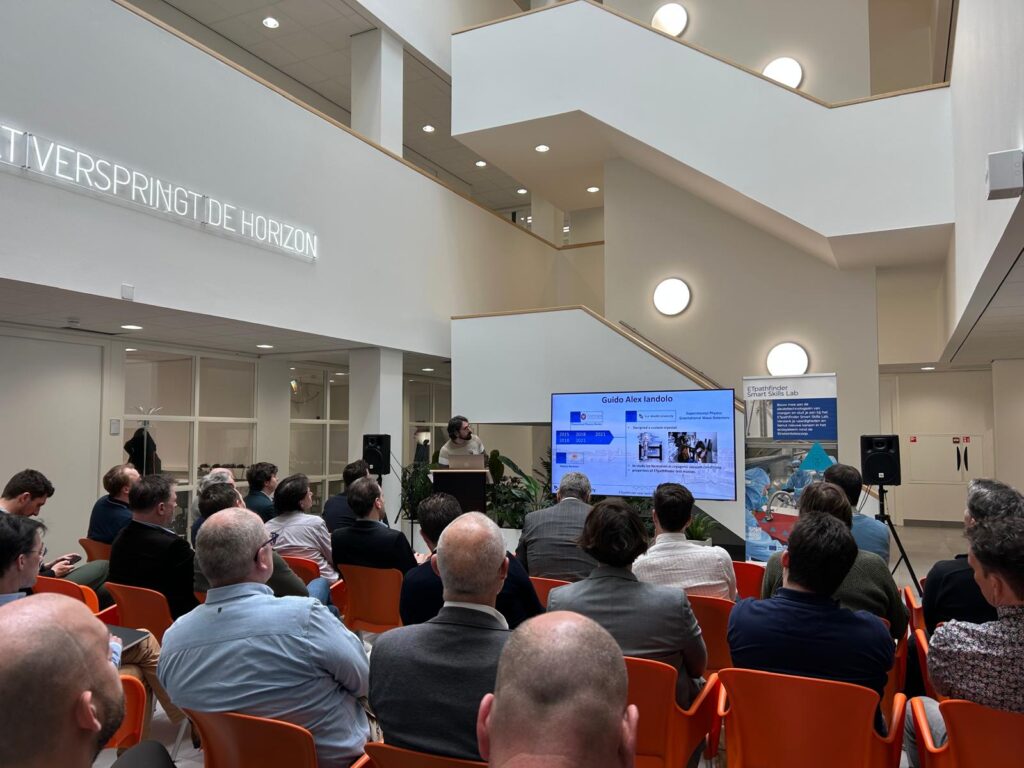
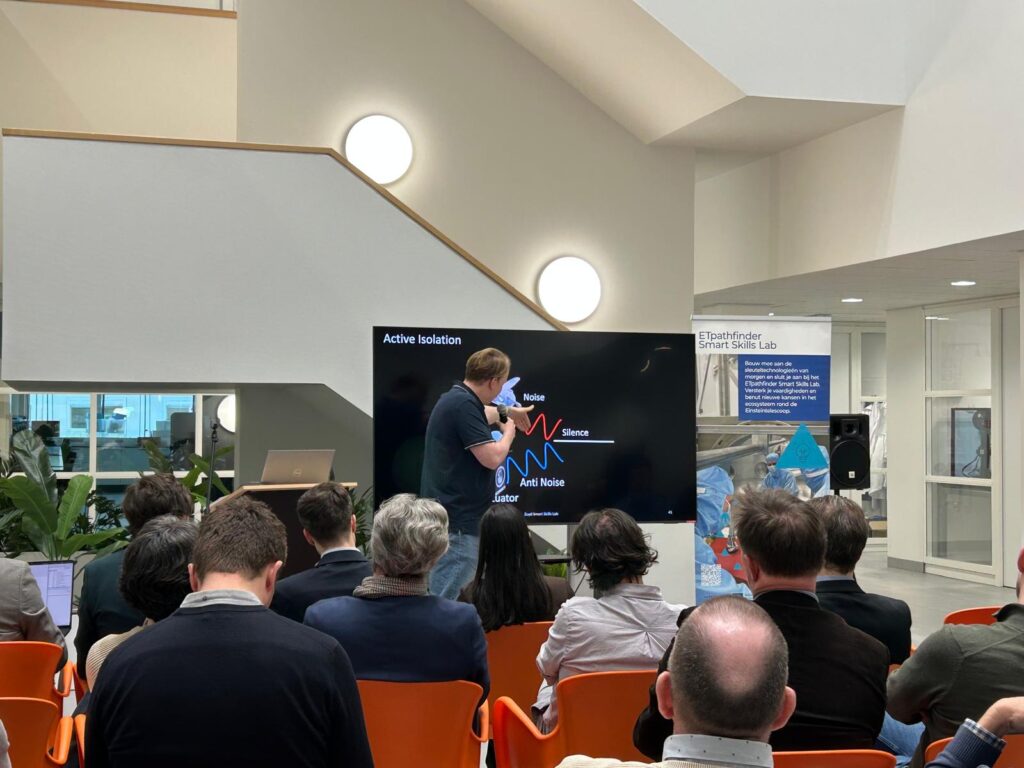
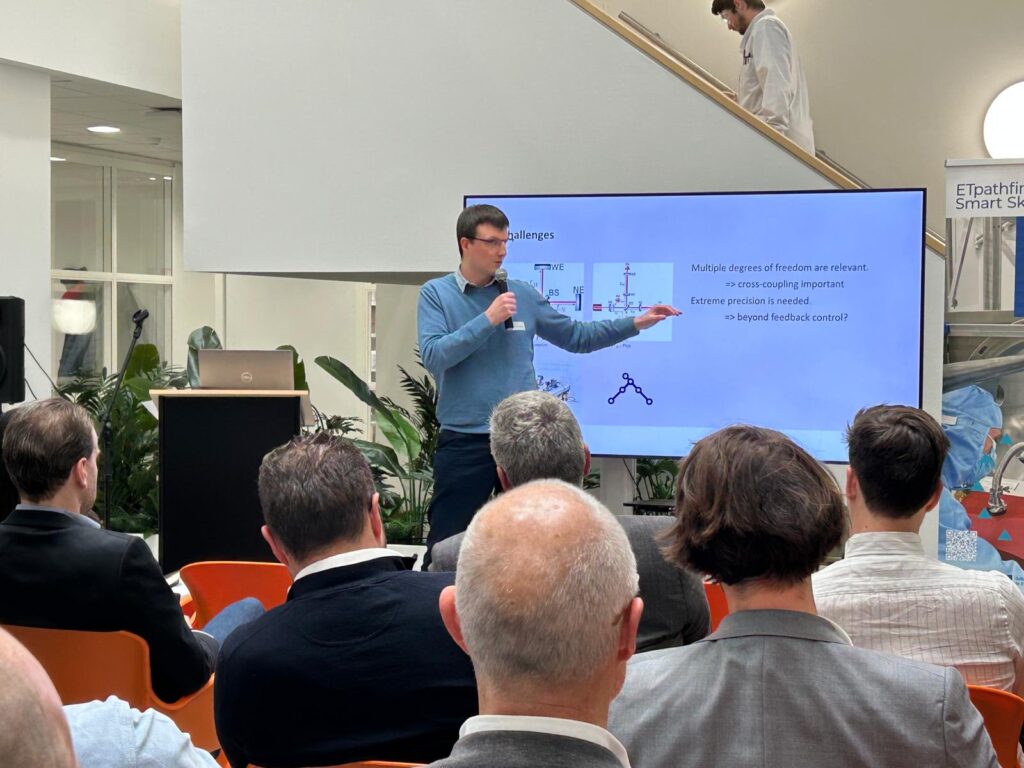
Fifty tech companies from Flanders and the Netherlands gathered at the ETpathfinder in Maastricht at the end of March. During this meeting organised by the Smart Skills Lab, they gained a unique insight into the technologies behind the Einstein Telescope and discovered how this knowledge can accelerate their own innovation. The Smart Skills Lab is an initiative of the Faculty of Science and Engineering (FSE) at Maastricht University and its 16 partners.
A peek behind the scenes
For many participants, it was the first time they had seen the ETpathfinder up close: the test facility where technologies for the Einstein Telescope are developed and tested. That first encounter proved immediately valuable. Companies gained insight into the technology and into the opportunities to contribute, for example as a supplier of components.

Bridging science and practice
The Smart Skills Lab bridges the gap between fundamental research and the day-to-day practice of businesses. The project translates advanced technology into concrete applications and skills.
“For scientists, what they’re working on makes perfect sense,” says project leader Smart Skills Lab Mels Prop. “But entrepreneurs see things differently: what does this mean for my product or process? That’s where we help.” This is achieved through training courses, workshops and secondments. “Companies can collaborate with one of the eleven PhD-holding technology experts or take part in practical sessions, for example in a cleanroom.”
Stefan Hild, scientific head and the man behind ET Pathfinder, emphasises the importance of introducing companies to the laboratory: “Companies ensure that the technologies developpedend up actually being put into practice.”

Technologies with broad impact
During the meeting, companies were introduced to technologies related to optics, vibration damping, robotics, and control engineering. Technologies that are relevant not only to the Einstein Telescope, but also to sectors such as mechanical engineering and the automotive industry. This means that companies will soon be able to apply the knowledge and results gained at the Smart Skills Lab to other projects or for clients other than solely for the Einstein Telescope. This strengthens their position.
For example, Guido Alex Landolo (Maastricht University) demonstrated how highly precise suspension systems can be used more widely. Jesse van Dongen (Zuyd University of Applied Sciences) stresses the importance of automation in cleanrooms: “People are often the biggest source of contamination. Automation is therefore essential.”
Hans van Haevermaet (University of Antwerp) demonstrated how much manual work is still required in the construction and calibration of sensors. Here precisely lie many opportunities for companies to improve and industrialise these processes.
Other experts from the universities in Leuven and Ghent demonstrated how vibration control techniques, sensors, and optical components can be directly applied in sectors such as mechanical engineering and the automotive industry.
Companies see concrete opportunities
For some companies, these opportunities tie in directly with their day-to-day operations. For instance, Guido Van Sint Feijth and Gaston Soons of Vidar (Sittard) see potential from their technical workshop, where people who face barriers to the labour market are employed. “We manufacture semi-finished products such as cable assemblies. Perhaps in the future we could also supply components for the Einstein Telescope. How wonderful would it be if our people could contribute to that?”
That practical perspective is echoed by other participants. Harry Gielen of metal fabrication firm Bervoets (Tessenderlo) puts it matter-of-factly: “If it’s made of metal, we can make it. From fine to coarse. We’d be happy to contribute to the infrastructure of the Einstein Telescope.”
Opportunities are also being spotted in the high-tech sector. Bettino Maessen of Faulhaber (Eindhoven) highlights the role of precision technology. “A lot of precise movements are required in this type of installation. We can contribute to that.”
This ties in with the broader role that companies can play, notes Rainier van Montfort of PDM Group (Maastricht): “We already work for high-tech companies such as ASML. For the Einstein Telescope, we can contribute to technical development, manufacture components and assist with management and maintenance.”

From introduction to taking action
The first connections were already made during the meeting itself. During and after the presentations, companies responded directly to questions from technology experts, leading to concrete discussions. It is precisely this exchange that is essential, points out Mels Prop: “The questions from companies help us to further refine our offering.”
Over the coming months, the experts will first undergo training to learn how to effectively convey their knowledge. Later this year, the first workshops and secondments will take place. Companies will then be able to get to work with technologies from the ETpathfinder, supported by experts from the network.
Mels Prop adds: “Participation is accessible and free of charge for SMEs in the region.” What stands out is the project’s broad approach: from vocational education to university, from theory to practice. Mels Prop: “It is precisely this combination that should ensure knowledge does not remain confined to the lab but actually finds its way onto the shop floor.”
Looking ahead
There is considerable interest from the business community and the foundations for collaboration have been laid. The coming period will reveal how these contacts develop into concrete innovations. One thing is clear: with the ETpathfinder as a testing ground, there is a solid foundation for bringing technology and entrepreneurship closer together and jointly building the future of the Einstein Telescope. And by participating, companies strengthen their own position.


